
A checkbox is often a core part of a graphical user interface, it lets a user select from one or more options which can be either True or False. It can be created using the QCheckBox widget. When creating an new checkbox with the QCheckBox class, the first parameter is the label.
A checkbox is a box the user can tick. In PyQt that is QCheckBox. It
holds two states, checked or not checked.
To apply actions to the toggle switch, we call .stateChanged.connect() followed by a callback method. When this method is called, it sends a boolean as state parameter. If checked, its the value QtCore.Qt.checked.
PyQt Checkbox example
To create a checkbox, first import QCheckBox from the module PyQt5.QtWidgets.
#https://pythonprogramminglanguage.com/pyqt-checkbox/ |
Then create a new checkbox. As parameter you can set the text that is shown next to the checkbox.
box = QCheckBox("Awesome?",self) |
You can change its position and size, by using the objects methods .move(x,y) and .resize(width,height).
box.move(20,20) |
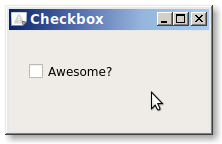
You may also want to include a callback function, that reacts to checkbox clicks
box.stateChanged.connect(self.clickBox) |
The Python PyQt example below creates a checkbox (QCheckBox) inside a window. If you click on the checkbox, it calls the method clickBox (toggled).
#https://pythonprogramminglanguage.com/pyqt-checkbox/ |
Reading the state
setChecked(True)ticks it from the start.isChecked()returns True or False.stateChangedis a signal with the new state as argument.toggledfires on every click,stateChangedalso fires when you set it in code.QtCore.Qt.CheckedandQtCore.Qt.Uncheckedare the values you get in the signal.setEnabled(False)greys it out so the user cannot change it.
A group of checkboxes where only one may be ticked is a radio button, not a checkbox. That is QRadioButton.
The fastest way to learn this is to write it yourself. The PyChallenge exercises run in your browser, no install needed.